

Alice Viroslav
MD - Neuro



Your AI-powered assistant to help choose the best medical imaging for your patients.
From accurate diagnostics to efficient coordination, we help support your care decisions at every step.
When you refer to Envision Imaging, you’re choosing more than advanced imaging—you’re selecting a partner dedicated to clinical excellence, consistent quality across all locations, expert radiology teams, timely and actionable reporting, and a patient-centered experience.
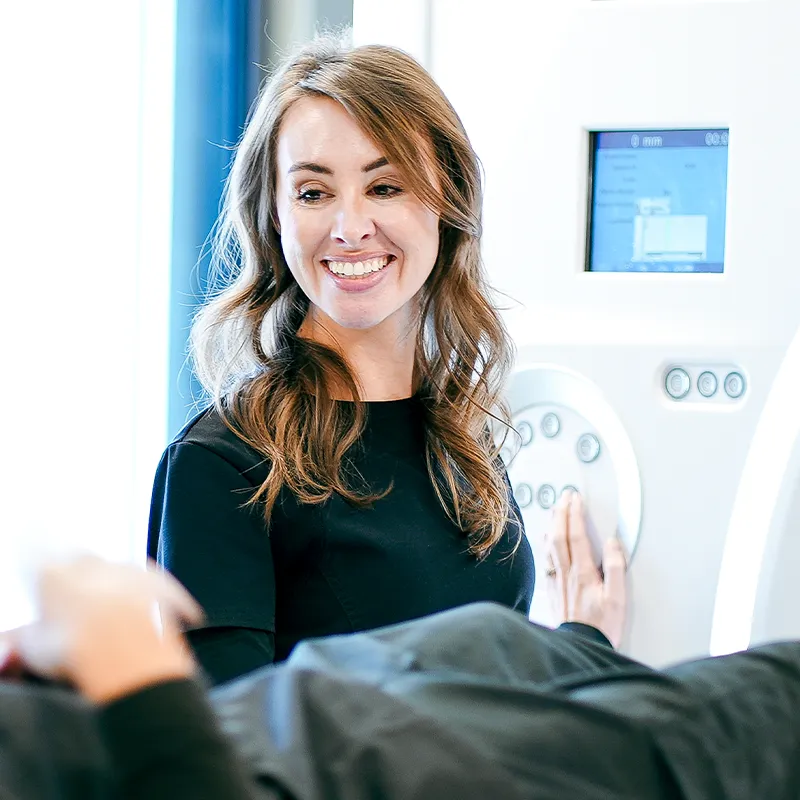
Here are essential tools and resources to streamline your workflow, enabling you to refer patients, place orders, and coordinate care.
Discover our AI-powered chat tool designed to help providers select the best medical imaging for patients. It uses advanced technology to streamline decisions with tailored recommendations based on conditions and imaging modalities.
InteleShare enables secure, seamless medical image sharing with EHR integration and QR-based access—eliminating CDs and improving care coordination.
Our Physician Access Link gives providers instant access to imaging and reports for faster clinical decisions.

Easy referral processes and responsive scheduling teams help reduce friction for both staff and patients.
Our radiologists are accessible for consults and case discussions, fostering true clinical collaboration.

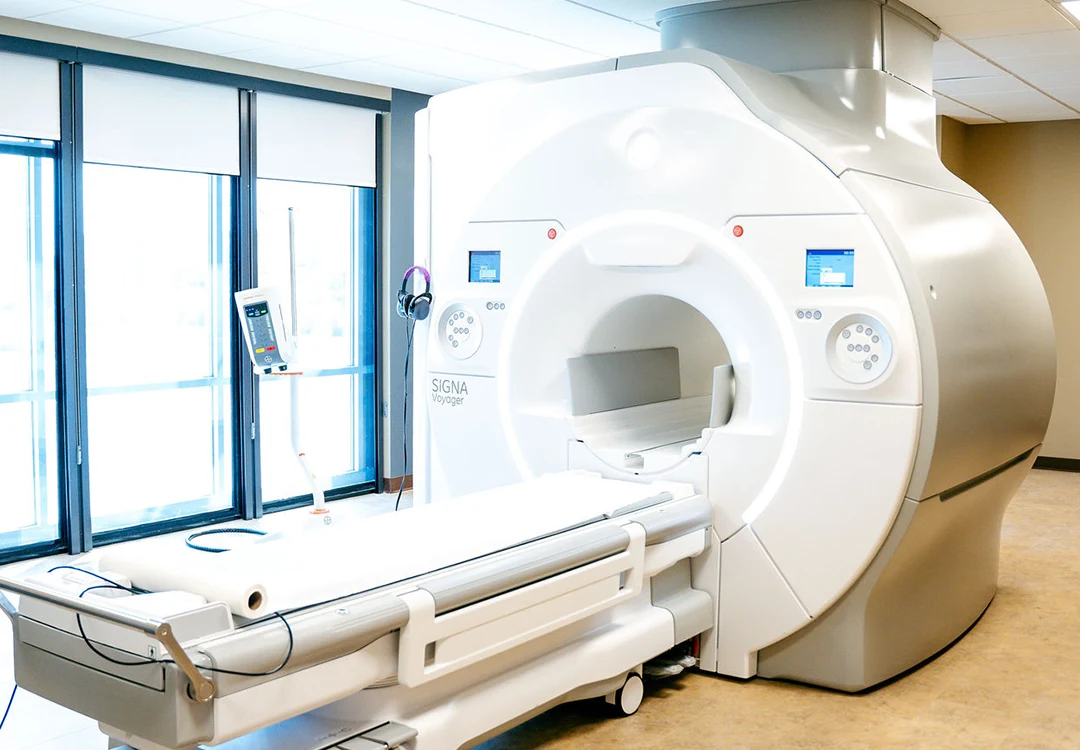
Secure systems designed to support efficient image access, reporting, and continuity of care.
The use of intravenous contrast varies depending on the type of exam requested and the clinical indication. In general, if the indication is to evaluate for Infection, Malignancy, or Vascular Pathology, then IV Contrast is recommended. Common indications for CT Chest With Contrast are: Pneumonia, Empyema, Pulmonary Abscess, Lung Cancer Staging, Mediastinal Mass, Chest Wall Mass, Pericarditis, High Energy Trauma, or vascular pathology such as Pulmonary Embolism, Aortic Dissection, and SVC Syndrome. IV Contrast is almost always recommended for CT Abdomen and Pelvis as long as there is no contraindication such as Allergy or Renal Insufficiency. Common indications for CT Abdomen and Pelvis Without Contrast are: Renal Stone and Retroperitoneal Hemorrhage. For a Head CT or Brain MRI, if the indication is to evaluate for Malignancy, Infection, or a Vascular Malformation, then IV Contrast is recommended. A CT Head Without IV Contrast or MRI Brain Without IV Contrast is appropriate for almost every other indication. For Spine MRI, if the indication is to evaluate for Malignancy, Infection/Epidural Abscess, Demyelination/MS, or a Vascular Malformation, then IV Contrast is recommended. An MRI Spine Without IV Contrast is appropriate for almost every other indication. For extremity/joint imaging, if the indication is to evaluate for Trauma/Fracture, no IV Contrast is necessary. If the indication is to evaluate for Malignancy, Infection, or a Vascular Abnormality, then IV Contrast is recommended.
When ordering pelvic ultrasounds, a TA + TV ultrasound is almost always the best order. Rarely is one indicated without the other. A TV US without a TA US may be used in select cases to follow up something that was clearly seen on the prior TV portion of the exam and follow up of that abnormality was recommended i.e. follow up uterine fibroids, follow up endometrial stripe thickness, or follow up ovarian cyst. A TA US without a TV US may be used in select cases, most commonly if the patient is not sexually active or for Obstetric ultrasounds in the 2nd and 3rd trimesters. ^ The reason to order both exams is two-fold, one technical and one practical. ^ Practically speaking, a TV US provides far superior images to a TA US because the probe is much closer to the pelvic organs. It often identifies pathology that is not well visualized transabdominally. Most pelvic ultrasound reports are based solely on the TV images and the TA images are only given a cursory look. However, it is not uncommon for an ovary to be seen only with the TA view and be obscured by bowel gas on the TV view. Additionally, very large uterine or ovarian cysts/masses can only be imaged in their entirety with the TA portion of the exam as the TV probe has a smaller limited field of view than the TA probe. Therefore, it is best to have both exams so that the TA can be a backup to the TV US if the TV images are inadequate. ^ This begs the question, why not order both and start with a TV US and then do a TA US only if necessary so that the patient is only charged for one exam? This is the technical point of the answer. For a TA US, the bladder is the acoustic window for the ultrasound beam and must be full to perform the exam. For a TV US, the bladder is emptied so it doesn't push away the pelvic organs out of the field of view. Therefore, if the TV US is performed first and an ovary or other structure cannot be visualized, then the TA portion of the exam is lost because the bladder has already been emptied. The patient must then return at a later date to finish the TA portion of the exam when the bladder has had time to refill. That is why a TA US is always performed prior to a TV US and they are almost always ordered together. Also, rarely some patients cannot tolerate the TV US and so it's useful to have the TA images as those images are better than no images.
The short answer is that CT works well when looking at bone injuries, while MRI can provide more detailed information about the soft tissues of the body. The more complete answer is that it's hard to say without knowing the exact question and clinical scenario, but there are some general guidelines you can follow to help you decide between a CT and an MRI. For imaging of the lungs, CT is the best exam. For imaging of chest wall trauma (scapula, ribs, sternum, etc.), CT is the best exam. For imaging of acute trauma, CT and CTA are usually the best exams. Cases where MRI is probably the better exam include spinal cord trauma and musculoskeletal trauma without an acute fracture seen on x-ray. For imaging of possible acute traumatic fractures seen on x-ray, CT is usually the best exam. While MRI is more sensitive for fractures because it can easily pick up bone marrow edema around tiny, non-displaced and easily missed fractures, it often does not have the resolution to identify tiny fracture fragments and bony avulsions. The fragments are essentially engulfed by the bone marrow/soft tissue edema and are sometimes strikingly obvious on x-ray but essentially invisible on MRI. Cases where MRI is probably the better exam include imaging of stress fractures/stress reactions (around the knee, tibia, and foot), sacral insufficiency fractures, or involve the dating of compression fractures of the spine. For imaging of cartilage, tendons, ligaments, labrum, and muscles, MRI is the best exam. CT can detect intramuscular hematomas, but is much less sensitive than MRI. If the hematoma is less than ~ 3cm, it may be difficult to visualize with CT. CT cannot detect muscle strains and contusions. CT cannot reliably detect tendon and ligament injuries. CT cannot detect cartilage injuries. CT and MRI are probably equally sensitive in detecting subcutaneous edema. For brain imaging, CT is the best exam for acute trauma where there is concern for a skull fracture or intracranial hemorrhage. For parenchymal abnormalities such as tumors, demyelinating lesions, and infarcts, MRI is the best exam. However, CT can detect tumors and infarcts with reasonable sensitivity and is therefore the recommended initial exam for ER patients, acutely symptomatic patients, and as a screening exam for low-risk patients who present with vague symptoms such as altered mental status.
Starting screening age and modality depend on the woman's lifetime risk of breast cancer. The current American College of Radiology (ACR) guidelines are as follows: For women at average risk for breast cancer, annual Digital Mammography (DM) screening should start at age 40. For women with genetics-based increased risk (and their untested first-degree relatives) or with a calculated lifetime risk of 20% or more, DM, with or without Digital Breast Tomosynthesis (DBT), should be performed annually beginning at age 30. For women with histories of chest radiation therapy before the age of 30, DM, with or without DBT, should be performed annually beginning at age 25 or 8 years after radiation therapy, whichever is later. For women with genetics-based increased risk (and their untested first-degree relatives), histories of chest radiation (cumulative dose of 10 Gy before age 30), or a calculated lifetime risk of 20% or more, breast MRI should be performed annually beginning at age 25 to 30. For women with personal histories of breast cancer and dense breast tissue, or those diagnosed before age 50, annual surveillance with breast MRI is recommended. For women with personal histories not included in the above, or with ADH, atypical lobular hyperplasia, or LCIS, MRI should be considered, especially if other risk factors are present. All women, especially black women and those of Ashkenazi Jewish descent, should be evaluated for breast cancer risk no later than age 30, so that those at higher risk can be identified and can benefit from supplemental screening. The above information was obtained from the ACR website. For more information, please click here.
The "T" stands for Tesla which is a measure of magnetic field strength. MRIs can range from 0.3T to 7T, but most magnets/MRI machines in practice today are either 1.5T or 3T. Magnets below 1T suffer from poor signal to noise ratio creating grainy/low resolution images. Magnets above 3T are essentially nonclinical and predominantly used for research purposes. 7T magnets are typically located at academic centers. In general, a 3T magnet will produce better quality images than a 1.5T magnet, however that is assuming that both magnets are equally optimized and have excellent Surface Radiofrequency Coils to receive the signal. MRI machine optimization is probably the most important factor in generating quality images, not necessarily the magnetic field strength. An optimized 1.5T magnet with excellent surface coils and software upgrades can produce better images than a nonoptimized 3T magnet. Furthermore, better technical quality (higher signal to noise ratio from 3T vs 1.5T) does not necessarily mean increased diagnostic accuracy. Most pathology seen on 3T can also be identified on 1.5T. Therefore, assuming quality MRI technicians and ancillary equipment, 1.5T MRI images are diagnostically equivalent to 3T MRI images even if they are slightly lower in resolution. There are a few exceptions to the "1.5T is roughly equivalent to 3T" rule however, the major one being imaging of the labrum. 3T imaging of the labrum is clearly superior to 1.5T imaging. If available, all MRI Arthrograms should be done with 3T imaging. 3T is also slightly superior to 1.5T in imaging small joints of the fingers and toes. Again, this is assuming that the surface coils are of high quality. A 1.5T magnet with a dedicated small extremity coil may produce better images than a 3T magnet with a larger surface coil. 3T can acquire images at a faster speed than 1.5T magnets. This may produce better overall images as patients move around more (create more motion artifact) the longer the scan time. All total joint arthroplasties should be performed on a 1.5T magnet as metallic hardware artifact increases with increasing magnetic field strength.
It depends on the type of MRI Contrast. Group 1 and Group 3 gadolinium agents are contraindicated in patients with Acute Kidney Injury (AKI) or Severe Chronic Renal Disease (GFR < 30 mL/min/1.73 m2) due to the risk of Nephrogenic Systemic Sclerosis (NSF). Group 2 gadolinium agents (MultiHance, Gadovist, Dotarem, Clariscan, and ProHance) have little to no risk of NSF according to recent data. Specifically, a recent systematic review and meta-analysis evaluated the pooled risks of NSF in patients with stage 4 or 5 chronic kidney disease receiving a Group 2 gadolinium-based contrast agent. The authors analyzed 16 studies with 4,931 patients who received Group 2 agents. The pooled risk of NSF was 0% (upper bound of 95% CI 0.07%). Thus, they estimated the per-patient risk of NSF from receiving Group 2 gadolinium-based contrast agents in stage 4 or 5 chronic kidney disease to be less than 0.07%. The American College of Radiology (ACR) permits the use of Group 2 gadolinium agents in patients with advanced kidney disease if the exam is medically necessary and recommends using the lowest dose possible to achieve diagnostic quality imaging. NSF is very rare, even in patients with poor renal function, but it is an irreversible complication of IV MRI Contrast administration where Gadolinium precipitates out of the bloodstream and into the tissues causing multiorgan, multi-system fibrosis. This information was obtained from the American College of Radiology (ACR) website. Please refer to the ACR Manual on Contrast Media for more information.